Reactive Flows and Combustion
Subscribe now for $400.00-
Module 1 - Introduction to reactive flow modeling
-
Module 2 - Combustion
-
Module 3 - Eddy Dissipation Model (EDM)
-
Module 4 - Solving complete reaction mechanisms
-
Module 5 - Unpremixed combustion
-
Module 6 - Premixed flames
-
Module 7 - Partially premixed combustion
-
Module 8 - Modeling pollutant formation
-
Module 9 - Modeling thermal radiation
-
Module 10 - Reactive multiphase flows
-
Final Consideration
Description
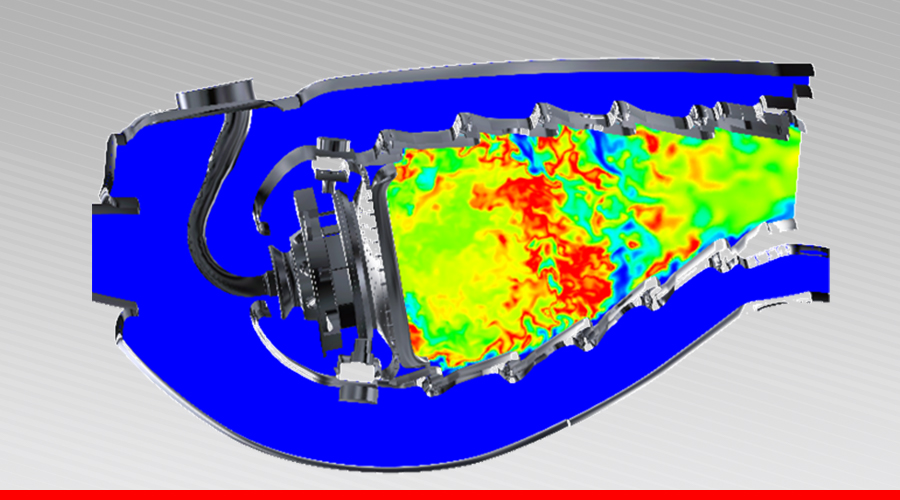
Learn to understand and predict the effects of reactive and combustion flows. An understanding of the physics and chemistry of combustion enables engineers to increase the energy efficiency and fuel flexibility of the products they develop, while reducing emissions; this is essential for the development of competitive products in the transportation, power generation, and materials processing industries, among others. Access period: 180 days with the single course purchase | 365 days with the Full Pass annual subscription and access to the entire course catalog
Category: Computational Fluid Dynamics
General info
Content
- Introduction to reactive flow modeling;
- Combustion;
- Eddy Dissipation Model (EDM);
- Solving complete reaction mechanisms;
- Unpremixed combustion;
- Premixed flames;
- Partially premixed combustion;
- Modeling pollutant formation;
- Modeling thermal radiation;
- Reactive multiphase flows.
Objective
To present the phenomena associated with chemical reactions, as well as the main characteristics of their computational modeling and the proper use of these features in Ansys commercial software.
Target audience
Industry professionals, students, and academic professors interested in improving their knowledge in simulation techniques.
Methodology
Students have the flexibility to complete the training at the most convenient time in their daily routine. The videos, texts, and exercises have been prepared, reviewed, and structured in advance, allowing for optimal asynchronous use. Access to the educational platform is individual and non-transferable. Sharing access and downloading video materials is prohibited. If a student violates ESSS’s copyright rules, they may face the penalties provided by law. Access period: 180 days with the single course purchase | 365 days with the Full Pass annual subscription and access to the entire course catalog
Certificate
Upon full completion of the course, students receive an international certificate in electronic format, confirming completion of the course and the total number of hours completed. The certificate is issued by the ESSS Institute, a global leader in the field of computer simulation. ESSS ensures the quality of the course through its experience and recognition as a leader in computer simulation. With more than 300 employees, it is undoubtedly the largest CAE company in Latin America, with a portfolio of more than 800 companies worldwide. The faculty consists of ESSS faculty members holding doctoral and master’s degrees, as well as guest lecturers, all with solid backgrounds in teaching, research, and consulting.
Subscribe now
Subscribe now for $400.00